
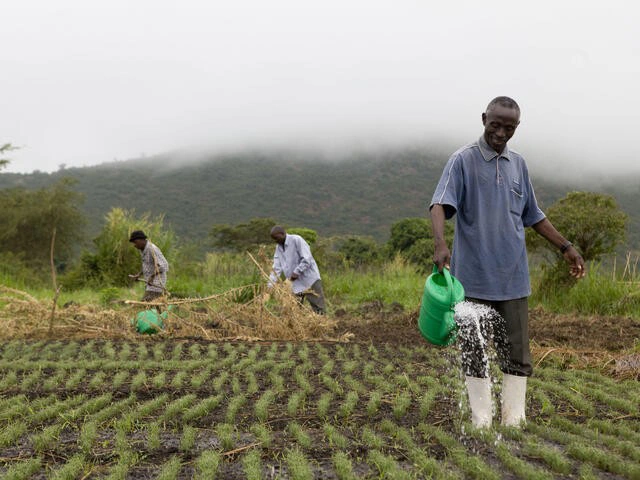
At Green Horizons Climate Action Initiative Uganda, we’re committed to empowering young people in communities through sustainable agriculture practices and climate action. Here’s a case study showcasing our impact.
The Challenge
A rural community in Uganda faced food insecurity, lacked access to sustainable agriculture practices, and was vulnerable to climate-related shocks. Human activities had also degraded the local wetland, threatening wildlife. The community struggled with droughts, infertile soils, pests, and limited access to quality seeds, leading to poor crop yields and significant food waste. Climate change exacerbated these challenges, with rising temperatures, changing rainfall patterns, and increased frequency of extreme weather events.
Climate Change Effects
The community faced several climate-related challenges, including:
- Droughts: Reduced crop yields, water scarcity, and increased poverty.
- Floods: Damage to crops, infrastructure, and loss of livelihoods.
- Soil degradation: Reduced fertility, erosion, and decreased agricultural productivity.
- Changes in rainfall patterns: Unpredictable growing seasons, reduced crop yields, and food insecurity.
Our Approach
We took a holistic approach, establishing:
- A small-scale farm providing training on agroecology and organic farming methods to 20 young people, focusing on sustainable crop rotation, soil conservation, and integrated pest management. We also established a seed bank, providing access to high-quality, drought-resistant seeds.
- Climate-resilient agriculture practices, including agroforestry and conservation agriculture, with 50 small-scale farmers. We introduced techniques such as rainwater harvesting, composting, and mulching to improve soil fertility and reduce water scarcity.
- Community-led conservation efforts to restore the degraded wetland ecosystem, including the establishment of a 20-acre community-managed wetland reserve and a team of 10 youth-led wetland monitors.
- A food waste prevention and management program, training farmers on post-harvest handling, storage, and value addition techniques. We established a community-led processing unit, producing value-added products such as juices, jams, and honey.
- An awareness and extension program, providing training and support to 200 local farmers on sustainable agriculture practices, climate-resilient techniques, and business skills.
The Outcome
- The farm produces nutritious food for the community, and youth have gained skills and income-generating opportunities, including a 30% increase in crop yields and a 50% increase in household income.
- Farmers report improved crop yields, increased resilience, and reduced greenhouse gas emissions, with a 40% reduction in soil erosion and a 25% increase in water retention.
- The wetland’s biodiversity has improved, with a 50% increase in native plant species and a 30% increase in wildlife populations.
- The community has reduced food waste by 40%, with a significant increase in food availability and accessibility.
- Value-added products generated an additional $10,000 in income for the community, with 70% of farmers reporting improved business skills and entrepreneurial opportunities.
- The awareness and extension program reached 200 farmers, with 90% reporting adoption of sustainable agriculture practices and 80% reporting improved crop yields.
Climate Change Adaptation and Mitigation
The project has helped the community adapt to climate change by:
- Improving soil health and fertility, reducing erosion, and increasing water retention.
- Promoting climate-resilient agriculture practices, such as agroforestry and conservation agriculture.
- Establishing a community-led wetland reserve, protecting biodiversity, and reducing greenhouse gas emissions.
- Providing training and support on climate-resilient techniques, such as rainwater harvesting and composting.
Impact on the Community
The project has had a significant impact on the community, improving food security, income, and livelihoods. The community now has access to nutritious food, and youth have gained skills and income-generating opportunities. The project has also empowered women, who are now actively involved in decision-making and leadership roles.
Challenges and Lessons Learned
The project faced several challenges, including limited resources, climate-related shocks, and pests. However, the community worked together to overcome these challenges, and we learned valuable lessons on the importance of community-led conservation and sustainable agriculture practices.
Conclusion
The project demonstrates the power of community-led conservation and sustainable agriculture practices in improving food security, climate resilience, and livelihoods. We are committed to continuing our work with the community, scaling up our efforts to reach more farmers and communities.
Recommendations
- Scale up community-led conservation and sustainable agriculture practices to reach more farmers and communities.
- Provide ongoing training and support to farmers on climate-resilient techniques and business skills.
- Establish more community-led processing units to add value to crops and generate income.
- Continue to empower women and youth, providing them with opportunities for leadership and decision-making roles.
 Nourishing people, protecting our planet, and empowering communities